Pinout & Plate may earn a commission on custom keyboard parts bought through our links at no additional cost to you. How Pinout & Plate earns affiliate commissions
Selecting a barebones keyboard kit allows builders to supply their own mechanical switches and keycaps while starting from a pre-assembled foundation of a chassis, mounting system, and hot-swappable printed circuit board (PCB). Because barebones kits establish the physical footprint, typing angle, switch socket orientation, and connection methods from the start, choosing the right baseline is critical before committing to switches and keycap profiles.
This guide compares four distinct barebones kits representing compact 75%, tenkeyless (80% TKL), and traditional 108-key full-size layouts. Each model offers different tradeoffs across case materials, wireless capabilities, and onboard controls based on merchant listing specifications.
| Model | Layout Size | Case Material | Mounting / Structure | Connectivity | Auxiliary Hardware |
|---|---|---|---|---|---|
| Chilkey ND75 | 75% Compact | Aluminium | Barebones Kit | Wireless / Wired | Integrated Mini Display |
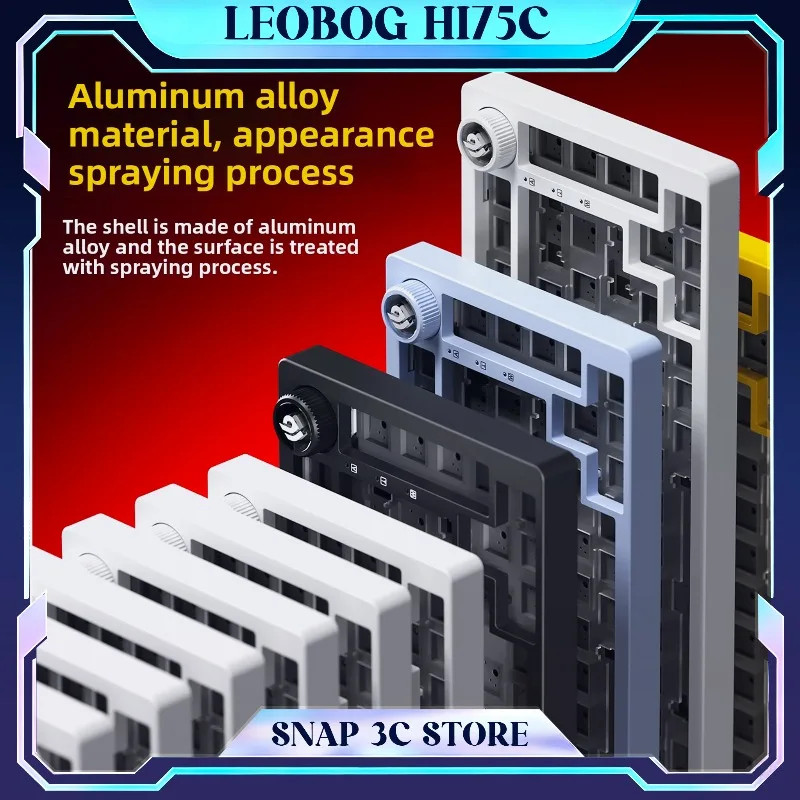
| LEOBOG Hi75 | 75% Compact | Aluminum Alloy (Sprayed) | Gasket Mount | Wired | Rotary Media Knob |
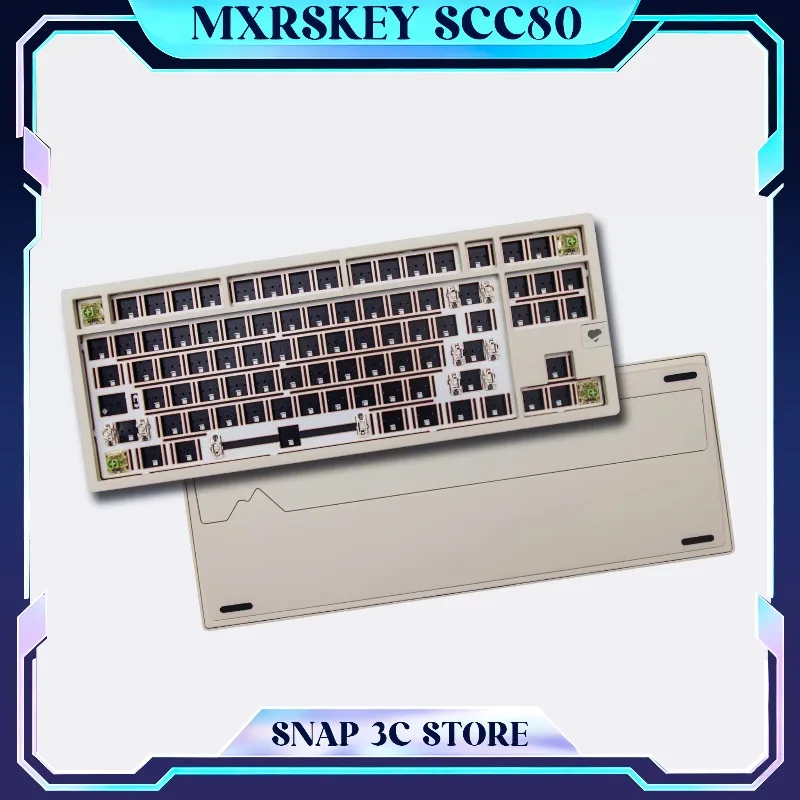
| MXRSKEY SCC80 | 80% TKL | Full Aluminum | Quick-Release Gasket | Tri-Mode (BT / 2.4G / Wired) | Internal Weight Accent |
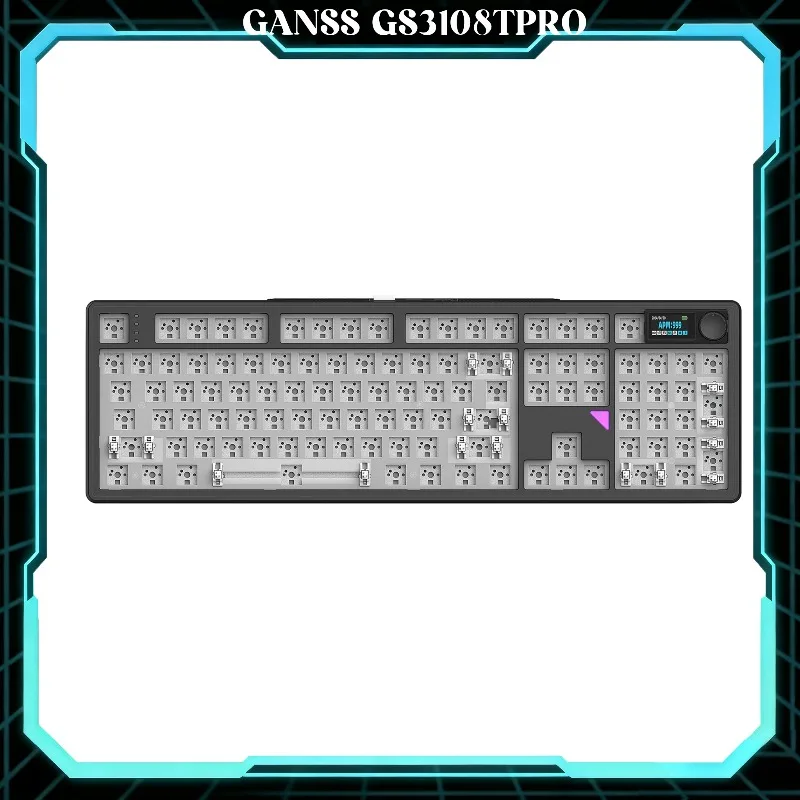
| GANSS GS3108T Pro | 108-Key Full Size | Enclosed Frame | Standard Tray / Plate | Tri-Mode (BT / 2.4G / Wired) | Status Screen + Knob |
Primary Pick: 75% Compact Aluminum Wireless Foundation
The 75% layout retains dedicated arrow keys and a functional top F-row while condensing the navigation cluster into a single vertical column, significantly saving horizontal desk space.
Chilkey ND75
The Chilkey ND75 serves as a metal-chassis baseline for compact mechanical setups. Stated as an aluminium wireless custom gaming barebone kit, it incorporates a structural top and bottom case housing hot-swap switch sockets. Visible in vendor reference diagrams is a compact rectangular display module embedded into the top-right corner of the plate area, offering visual status feedback without expanding the overall chassis footprint.

Alternative Layouts and Case Mounting Approaches
Beyond the compact wireless aluminum format, builders may prefer dedicated wired reliability with rotary control, classic tenkeyless layouts with toolless assembly, or full-size numpad functionality.
LEOBOG Hi75: 75% Gasket-Mounted Wired Baseline
For builders who prefer a dedicated wired cable connection over managing battery charging cycles, the LEOBOG Hi75 provides a 75% layout within an aluminum alloy frame. The manufacturer listing notes an appearance spraying finish process and a gasket-mounted plate configuration designed to isolate the typing plate from direct rigid contact with the outer metal shell. A textured rotary encoder knob is integrated into the top right, providing physical media and volume management alongside hot-swappable RGB switch sockets.
MXRSKEY SCC80: 80% Tenkeyless with Quick-Release Gasket
The standard 80% TKL format provides a traditional spacing arrangement that separates the alphanumeric keys, arrow block, and navigation cluster into distinct physical zones. The MXRSKEY SCC80 implements this form factor in a full aluminum enclosure featuring a quick-release gasket system. This design is advertised to streamline disassembly for modders who frequently adjust interior dampening foams or swap stabilizer hardware. It provides tri-mode connectivity (Bluetooth, 2.4GHz RF, and wired USB) for multi-device workstations.
GANSS GS3108T Pro: 108-Key Full-Size Tri-Mode Kit
When productivity requires a dedicated numeric keypad and dedicated secondary function keys, compact form factors require external numpad add-ons. The GANSS GS3108T Pro provides a full 108-key ANSI layout in a single barebones chassis. The PCB is advertised with hot-swappable sockets and south-facing RGB LEDs, a configuration designed to prevent physical keycap interference when pairing mechanical switches with popular Cherry-profile keycap sets. It also integrates tri-mode wireless connectivity alongside an upper status screen and rotary knob.
Key Decision Criteria for Barebones Kits
1. Footprint vs. Key Retention
Layout selection directly impacts desk clearance and ergonomics. A 75% kit (such as the Chilkey ND75 or LEOBOG Hi75) conserves mouse travel area by consolidating navigation keys into a shared boundary with the main key cluster. An 80% TKL preserves traditional spacing between functional blocks, while a 108-key kit delivers uninterrupted access to data-entry numpads at the expense of a wider footprint.
2. Case Material and Mounting Style
Aluminum cases provide structural rigidity and added desktop weight, minimizing chassis shifting during vigorous typing. Gasket-mounted designs (featured on the Hi75 and SCC80) support the plate via flexible dampening tabs rather than rigid screw standoffs, reducing vibrations transferred into the exterior housing.
3. Connectivity Requirements
Wired-only kits eliminate battery degradation concerns and RF interference in dense wireless environments. Conversely, tri-mode kits provide Bluetooth pairing across portable devices alongside low-latency 2.4GHz dongles for desktop gaming.
4. Switch Sockets and LED Orientation
Hot-swap sockets allow builders to install standard 3-pin or 5-pin mechanical switches without soldering. When selecting switches and keycaps, south-facing LED orientation (as stated on the GS3108T Pro) provides broader clearance for thick-walled Cherry profile keycaps compared to north-facing LED sockets.
Pre-Purchase Verification Checklist
- Confirm whether plate stabilizers are pre-installed or if third-party screw-in stabilizers are supported.
- Verify whether the kit requires proprietary driver software or supports open standard configuration tools.
- Check the stated package inclusions to confirm whether USB cables, keycap pullers, and 2.4GHz receivers are bundled with the barebones chassis.
Research basis: This comparison uses the supplied marketplace listing descriptions, stated properties and reference prices. Seller claims have not been independently verified; information missing from this comparison may still be available from the seller. No physical or hands-on testing was performed.